One research run, five honest steps.
From the packet you send to the current cited memo at delivery — this is exactly what happens to a site inside RealClear, stage for stage. No step is decorative, and every step can stop the memo.
What happens to a site, stage for stage.
An address, a parcel number, coordinates, a dropped pin — or the boundary you draw, with live acreage as you draw it. An address is a point; a drawn boundary is a site.
Add the intended use and the scale in your vertical's own units — megawatts for a data center, units for multifamily, square feet for a warehouse — plus, optionally, a line on what you're trying to build there. Everything else is derived from the public record.
First, the jurisdiction resolves. A jurisdiction we haven't deep-mapped yet is never rejected — an unmatched address triggers its own dedicated research run before anything is written.
Then five research layers read the record in parallel — a zoning reader, a pathway mapper, a community sentinel, a comparable analyst, and a report writer — with live research from the open web, plus a geographic scan of the overlays that govern the site itself.
Findings land in a risk register where every row is source-linked. The citation gate is mechanical: a claim without a cited source is blocked from delivery, and the claims the recommendation leans on are re-verified against their sources.
A gap in the record is flagged, never guessed. And if a load-bearing check fails, the memo is held, not shipped — the honest hold is the feature, not the failure.
Market benchmarks are sourced and cited, then the deal arithmetic is computed deterministically — finding → calendar → carry — with a sensitivity band for when the same finding surfaces later.
Grounded figures cite their source. Anything ungrounded is labeled illustrative — the exhibit says so on its face.
Advance, Hold, or Kill — computed from the cited risk register, with a guard that keeps the score and the recommendation consistent. It is never written first and justified after.
The band leads; the score is subordinate. Read the band, not the number.
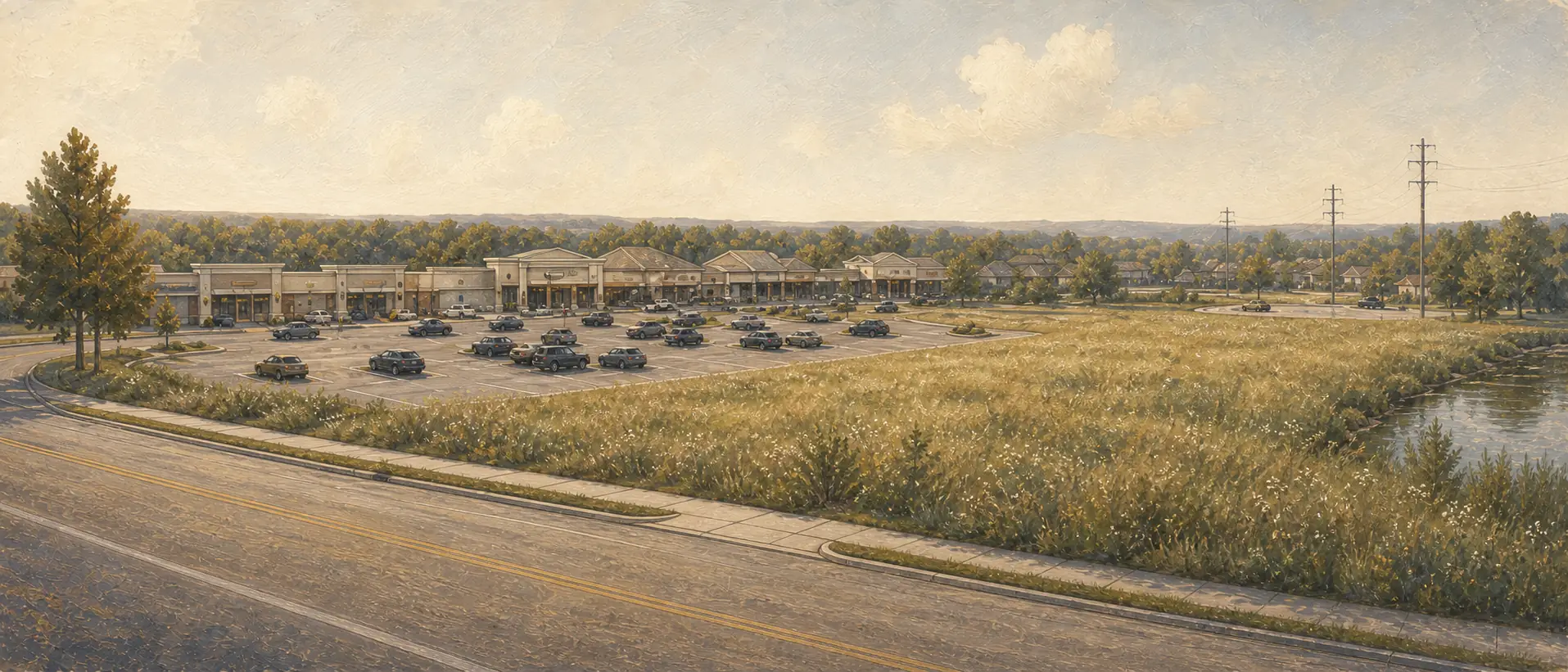
The usable ground gets smaller.
Setbacks, stormwater, buffers, and access geometry define the real development envelope.
Claim → citation → the paper itself.
“The parcel sits inside a discretionary CUP district — a conditional-use permit path, not by-right.”
✳ analyst's note — the memo tells you it is showing 12 of 47 sources — the depth is disclosed, not implied.
Sometimes the memo doesn't ship. That's the feature.
A research tool that always answers is a research tool you cannot trust.
A memo that cannot stand behind its band is held, not shipped — missing controlling evidence, an uncited claim, or a failed load-bearing check — each one stops delivery on its own. You are told the memo is held and why; a confident-sounding guess never leaves the building.
One possible QSR test fit.
This downstream visual is illustrative—not a predicted entitlement outcome or a RealClear deliverable.
PROPOSED PARKINGSHARED ACCESSDRIVE-THROUGHPROPOSED QSRSERVICE AREAMENU BOARD
Asked before the first packet, answered on the record.
How do I give you the site?
Five ways, all live: an address, a parcel number (APN), coordinates, a dropped pin, or a boundary you draw on the map with live acreage. Add the intended use and the scale in your vertical's own units — megawatts for a data center, units for multifamily, square feet for a warehouse — plus, optionally, a line on what you're trying to build there.
How fast does the memo arrive?
We confirm the delivery window when we accept your completed property submission. Complex or thin-record sites may require more research. Delivery timing and notification channels are confirmed during onboarding.
What does the memo include?
A recommendation (Advance, Hold, or Kill) with explicit professional handoffs, a source-linked risk register, the entitlement path with its veto points, community posture from the local record, comparable outcomes, deal arithmetic, and the source register.
What if my jurisdiction isn't deeply mapped yet?
It is never a rejection. An unmatched address triggers its own dedicated research run before the memo is written, and all 50 states are already covered at the state and federal layer. See The Record for the full coverage story.
How do you keep the claims honest?
Mechanically. A claim without a cited source is blocked from delivery; the claims the recommendation leans on are re-verified against their sources; and a memo that cannot stand behind its band is held, not shipped. Five gates in total — each one can hold the memo on its own, documented on The Record.
Does this replace my attorneys and consultants?
No — and it is not legal advice. The memo is the decision gate before deep diligence: it hands counsel, civil, utility, and the local team a cited head start and names the exact questions each lane still has to answer. Verify independently before making investment decisions.
What happens after the memo is delivered?
The delivered memo and source register remain available in the property workspace. This engagement includes no post-delivery refresh or monitoring.
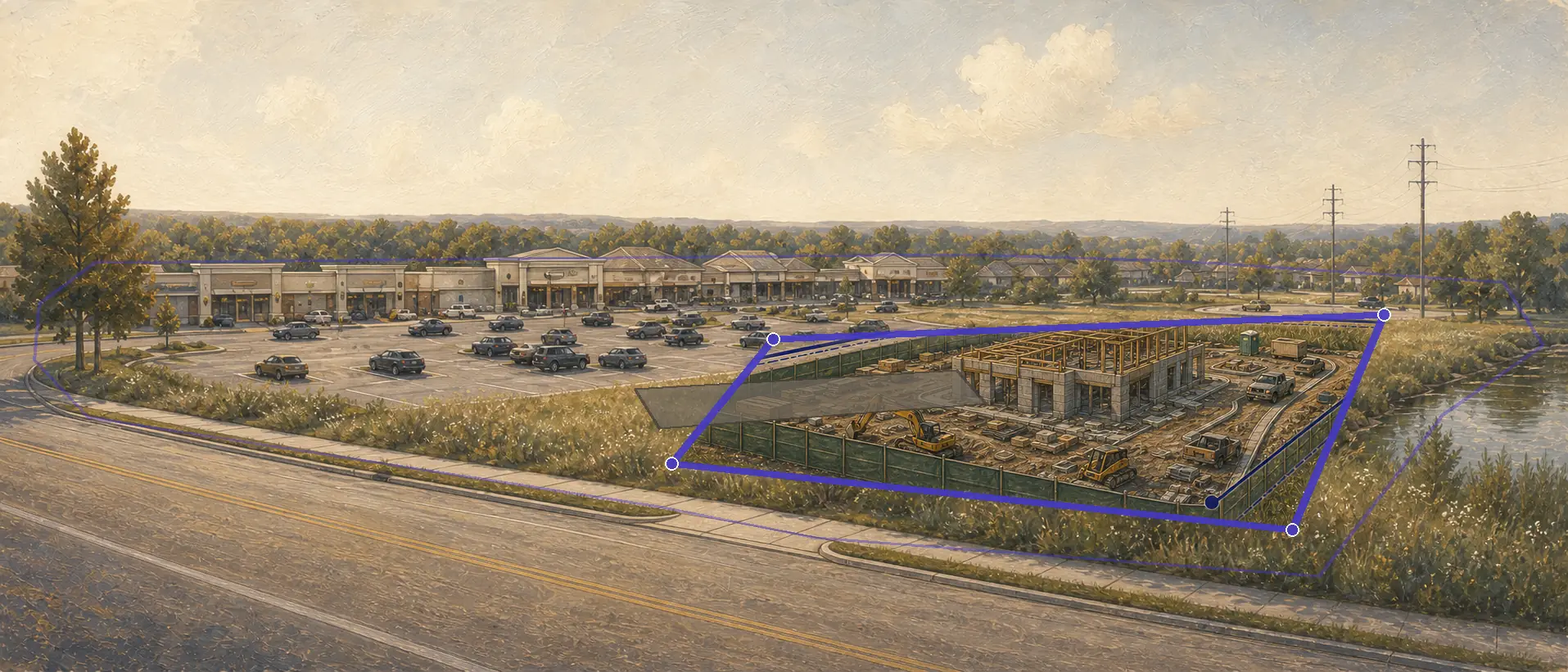
If the project advances, construction could follow.
This downstream visual is illustrative—not a construction prediction, approval claim, or RealClear deliverable.
EXISTING RETAILCONSTRUCTION FENCEOUTPARCEL AREASITE BOUNDARYSTORMWATER
Five steps. One cited memo.
The site-memo queue targets a delivery window confirmed at acceptance of the completed property submission. Complex or thin-record sites can take longer.