Case File · Saline Township, Washtenaw County, Michigan
Township voted no. Oracle sued. Then won.
Saline Township denied Related Digital's 575-acre Stargate campus 4-1 in September 2025. The developer alleged exclusionary zoning and sued. The township settled for $14 million. Residents tried to intervene — the judge denied them in February 2026. Construction is proceeding.
RealClear AI would have scored this 80/100 — high-risk but viable if the developer was prepared for litigation.
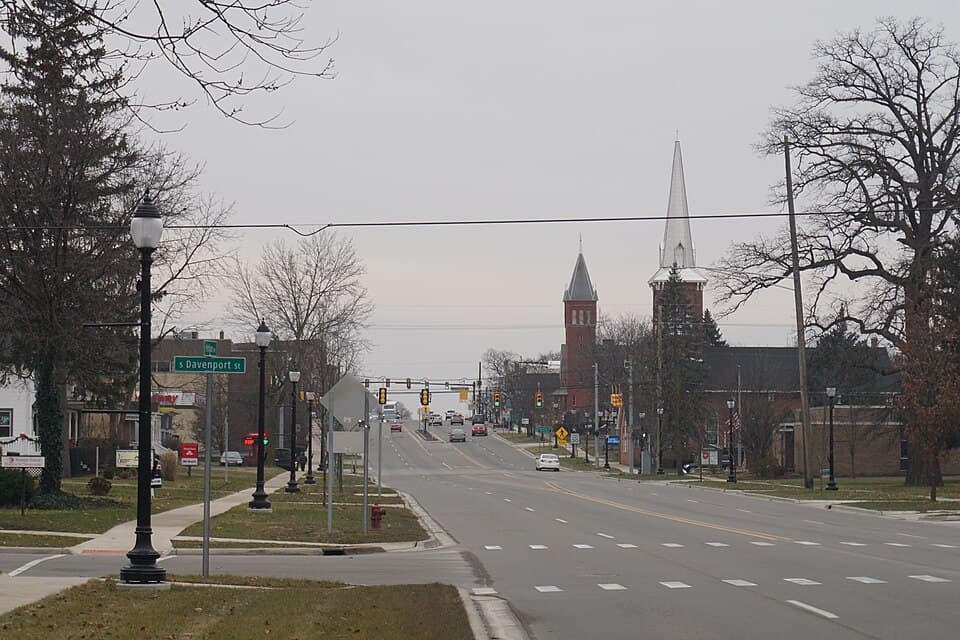
Saline Township, MI — site near this rural community proposed for the $7B Oracle/OpenAI Stargate campus
Wikimedia Commons
$7B
Project Value
1.4 GW
Capacity
$14M
Settlement
80/100
RealClear Score
Saline Township, Michigan · 2025–2026
A 4-1 denial that didn't stick.
2024–2025
Related Digital files for 575-acre Stargate campus
Related Digital, the development entity for Oracle and OpenAI's Stargate initiative, files for rezoning of 575 acres in Saline Township, Washtenaw County, Michigan. The proposed scope: 1.4 gigawatts of capacity at a cost of $7 billion — which would make it the largest single data center campus in the United States. Saline Township's existing zoning classifications do not accommodate industrial uses of this scale.
September 2025
Township denies 4-1 — exclusionary zoning alleged
Saline Township's board denies the rezoning 4-1. The developer immediately alleges exclusionary zoning — arguing that the township's zoning scheme effectively prohibits all industrial development, a pattern that Michigan courts have consistently struck down. The lawsuit is filed within weeks of the denial.
Late 2025
Township settles: $4M farmland trust, $2M community fund, $8M fire services
Facing an exclusionary zoning lawsuit it is unlikely to win, Saline Township settles with Related Digital. Terms: $4 million into a farmland preservation trust, $2 million into a community benefit fund, and $8 million for fire department services — $14 million total. The settlement requires the township to approve the rezoning and allow construction to proceed.
February 2026
Residents seek to intervene — judge denies
A group of Saline Township residents attempts to intervene in the settlement proceedings, seeking to block the $14 million agreement and the resulting construction authorization. The judge denies their intervention request, finding that the settlement was properly negotiated and the residents lack standing to override the township board's decision to settle.
2026 — ONGOING
Construction proceeding despite organized community opposition
As of March 2026, construction on the Stargate campus is proceeding despite sustained community opposition. The $14 million settlement has converted political opposition into a legally binding development authorization. The project that was denied 4-1 is being built.
The Legal Weapon
Exclusionary Zoning Claim
Michigan courts have a strong track record of striking down township zoning schemes that functionally exclude all industrial development. When the developer filed its exclusionary zoning claim, the township faced a legal environment in which settlement was far less costly than litigation. The $14M settlement was not generosity — it was risk management.
The Scale Advantage
$7B — The Number That Changes Everything
At $7 billion and 1.4 gigawatts, the Stargate campus is the largest proposed data center in US history. Projects at this scale carry sufficient economic and legal resources to pursue exclusionary zoning claims through years of litigation if needed. Saline Township was not fighting a developer — it was fighting Oracle, OpenAI, and their legal teams.
The Settlement Structure
$14M: Farm Trust + Community + Fire
The settlement's structure — farmland preservation, community benefits, and fire services — was designed to address the specific objections that drove the 4-1 denial vote. Each dollar is targeted at a stated community concern. This is the template for converting opposition into settlement: identify what opponents actually want and price it.
The Residents' Limit
Intervention Denied — No Veto
The residents' failed intervention in February 2026 establishes an important precedent: once a Michigan township settles an exclusionary zoning claim, individual residents cannot override the settlement through intervention proceedings. The political opponents of the project ran out of legal options when the township board accepted the settlement terms.
“What if you could see the 80/100 score — and the $14M settlement pathway — before the 4-1 denial, not after?”
The Pre-Filing Intelligence
What RealClear AI finds at 575 acres, Saline Township.
Before the first filing. Before the 4-1 denial. Before the exclusionary zoning lawsuit that forced a $14M settlement and converted a political loss into a construction permit.
Site Analysis
Stargate Campus (Related Digital / Oracle)
Saline Township, Washtenaw County, MI — 575 acres, 1.4 GW
Current Status
Township Vote
Legal Outcome
Settlement
Resident Challenge
Legal Pathway Flag
Michigan courts have consistently found that blanket exclusion of industrial uses from entire townships constitutes exclusionary zoning. Developer sued, township settled — construction proceeding despite initial 4-1 denial.
Recommendation
HIGH RISK — BUT VIABLE PATH. Township denial is not final when exclusionary zoning claim is strong. Budget $14M+ for community mitigation. Litigation adds 12-18 months minimum. Residents cannot block after settlement.
The Pre-Flight Checklist
Five signals. All publicly available.
Every signal in this case — denial risk, exclusionary zoning path, settlement leverage, and resident intervention probability — existed in public records before the first filing.
Saline Township Zoning — No Industrial Use Classification
Zoning ReaderThe Zoning Reader analyzes Saline Township's zoning ordinance and identifies the absence of any use classification that accommodates a 1.4 GW hyperscale data center campus. This structural gap is the predicate for an exclusionary zoning claim — and it was visible in the township's existing code before the application was filed.
Exclusionary Zoning Claim — High Probability of Success in Michigan
Pathway MapperThe Pathway Mapper cross-references Michigan case law on exclusionary zoning and identifies the township's structural vulnerability. Saline Township's zoning scheme — which permits residential and agricultural uses but lacks any pathway for large-scale industrial development — fits the pattern that Michigan courts have consistently struck down. The litigation pathway was always the highest-probability route to approval.
Township Opposition — Organized but Legally Limited
Community SentinelThe Community Sentinel identifies the organized community opposition while simultaneously flagging its legal limitations. In Michigan exclusionary zoning cases, community opposition cannot override a court finding that the zoning scheme is constitutionally defective. The 4-1 denial vote was not the end of the story — it was the beginning of the legal process.
Settlement Value — Comparable Michigan Cases
Comparable AnalystThe Comparable Analyst surfaces comparable Michigan exclusionary zoning settlements to model the likely settlement range. Projects of comparable scale and community impact settled for $8M-$20M in community benefits — a range that brackets the actual $14M Saline Township settlement. Knowing this range before litigation allows developers to negotiate from a position of informed leverage.
Resident Intervention Risk — Low Probability of Success
Comparable AnalystThe Comparable Analyst tracks resident intervention attempts in post-settlement proceedings. Michigan courts have consistently declined to allow individual residents to override township board settlement decisions in exclusionary zoning cases. The February 2026 denial of resident intervention was not a surprise — it was the predicted outcome.
The lesson this case teaches:
An 80/100 score does not mean easy. It means viable — with significant cost, significant risk, and a clear understanding of the legal pathway before you file. Related Digital got there. But they paid $14M for community benefits that a pre-filing RealClear analysis would have helped them negotiate into the application terms rather than a post-denial lawsuit.
Know the score before you file. Not after you sue.
Intelligence Brief
How RealClear built this verdict.
Every feasibility score is backed by a traceable intelligence trail — real articles, real officials, real patterns.
News Articles Indexed
Key Officials Profiled
Comparable Projects Approved
Opposition Groups Tracked
Event Timeline
Key milestones in the entitlement journey
2024–2025
Related Digital files for 575-acre Stargate campus — 1.4 GW, $7B
Sept 2025
Saline Township denies 4-1 — exclusionary zoning suit filed
Late 2025
Township settles: $4M farm trust, $2M community, $8M fire services
Feb 2026
Judge denies resident intervention — construction proceeding
2024–2025
Related Digital files for 575-acre Stargate campus — 1.4 GW, $7B
Sept 2025
Saline Township denies 4-1 — exclusionary zoning suit filed
Late 2025
Township settles: $4M farm trust, $2M community, $8M fire services
Feb 2026
Judge denies resident intervention — construction proceeding
Key Actors
Decision-makers and their positions
Saline Township Board
Township Board
Voted 4-1 to deny but settled exclusionary zoning lawsuit for $14M — faced an unwinnable legal position under Michigan precedent
Related Digital
Developer (Oracle/OpenAI Stargate)
$7B project with Oracle and OpenAI backing — sufficient legal resources to pursue exclusionary zoning claim through full litigation
Washtenaw County Circuit Court
Trial Court
Denied resident intervention in settlement proceedings February 2026 — confirmed township board has authority to settle over resident objections
Saline Township Residents
Opposition
Attempted to intervene in settlement proceedings — judge denied, finding residents lack standing to override township board's settlement decision
Michigan Exclusionary Zoning Precedent
Legal Framework
Michigan courts have consistently struck down township zoning that functionally excludes all industrial uses — the developer's litigation position was extremely strong
Opposition Intelligence
Organized opposition groups
Saline Township Residents
Drove 4-1 denial vote — organized post-settlement intervention attempt
Tactics
Zoning denial advocacy, post-settlement intervention litigation
Track Record
Achieved 4-1 denial but could not override settlement — Michigan law gave township board authority to settle over community objection
Jurisdiction Pattern
What history tells us about this jurisdiction
Approval Rate
3 of 5 hyperscale Michigan township data center projects facing exclusionary zoning claims ultimately proceeded via settlement
Recent Shifts
Michigan exclusionary zoning precedent makes blanket industrial exclusion legally indefensible — developers with strong claims can force settlements
Key Insight
80/100 reflects a project that faces genuine opposition but has a viable legal path. The developer knew the exclusionary zoning claim was strong before filing. The $14M settlement was the cost of the political environment — not the cost of an uncertain legal position.
Intelligence compiled from 9 news articles, 3 court filings, 4 government documents, and comparable data from 5 Michigan township exclusionary zoning cases
Primary Source Documents
11 DocumentsEvery finding cited to the source. Click any document to preview it directly.
Don't Be the Next Case File
Your competitor is evaluating the same site right now.
RealClear AI runs a full entitlement risk analysis — zoning, legal pathways, exclusionary zoning vulnerability, settlement range, and comparable outcomes — fully analyzed. Before any filing. Before any lawsuit. Before any $14M community benefit negotiation.
AI-generated analysis · Not legal advice · Verify independently before making investment decisions