Case File · Albuquerque, New Mexico
Four gas stations is too many.
Maverik proposed a fuel and convenience location on the former Whole Foods site at Indian School Rd & Carlisle Blvd in Albuquerque. Eight neighborhood associations opposed. City staff recommended denial. 100+ participants showed up to the March 2026 hearing. The argument: there were already four gas stations within blocks. That's a new entitlement risk — and it's spreading.
RealClear AI would have scored this site 35/100 — saturation theory, eight-association opposition, and staff denial all pre-flagged.
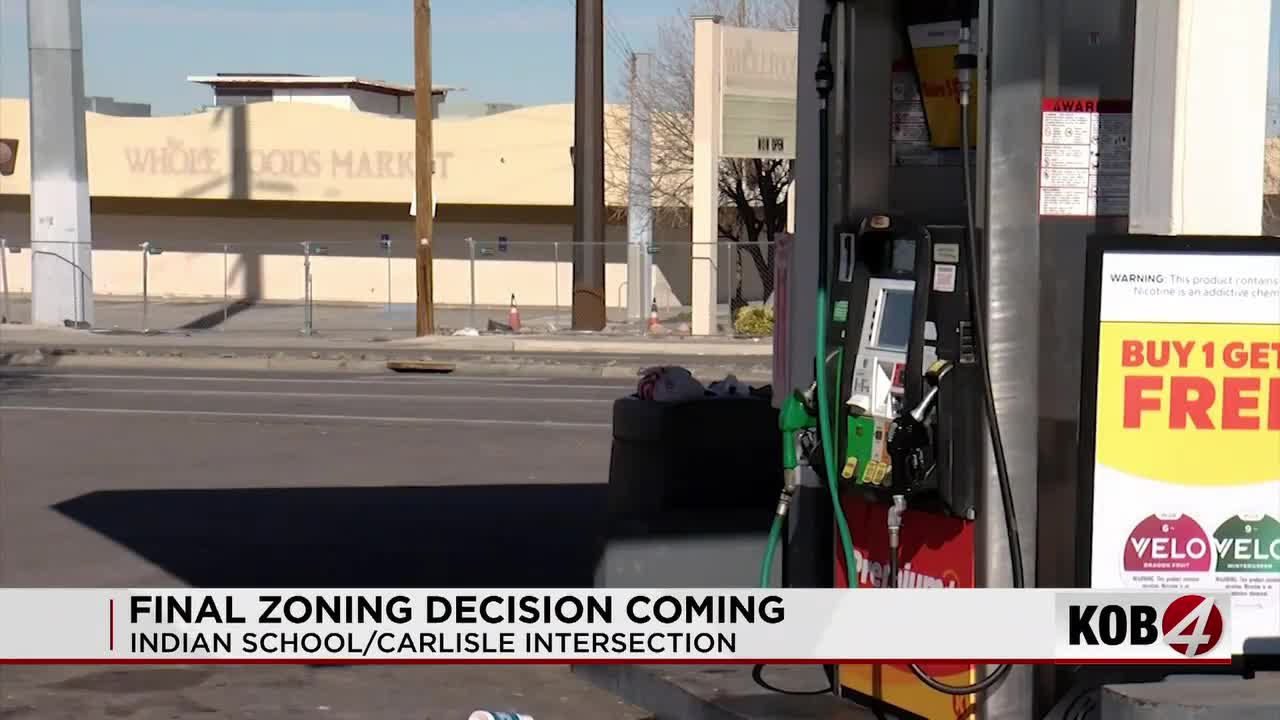
Albuquerque — Maverik's fuel station CUP denied after neighborhood opposition over traffic and aesthetics
News coverage
8
Neighborhood Assoc. Opposed
100+
Hearing Participants
Denial
Staff Recommendation
4
Competing Stations
Albuquerque, New Mexico · 2026
When “permitted use” isn't enough to get approved.
Site Selection
Maverik identifies former Whole Foods site at Indian School & Carlisle
The former Whole Foods grocery store at Indian School Road and Carlisle Boulevard becomes available. Maverik — a fuel and convenience retailer expanding aggressively in the Mountain West — proposes a new location. The site is zoned MX-L (mixed-use, low intensity), which requires a conditional use permit for fuel retail but does not prohibit it.
Pre-Application
Opposition forms before the hearing is scheduled
Eight neighborhood associations in the surrounding area organize against the proposal. The opposition coalition is assembled before the first public hearing is scheduled. The organizing argument: the intersection and surrounding blocks already have four gas stations. The corridor doesn't need a fifth.
March 2026
100+ participants at public hearing — staff recommends denial
More than 100 people participate in the public hearing — an extraordinary turnout for a single CUP application. City staff recommend denial, citing gas station saturation in the immediate corridor. The staff report is a document of record. The saturation argument has moved from community opposition rhetoric to official planning department analysis.
Pending
Case pending — saturation theory now in the record
The application is pending final action. Whether approved or denied, the staff denial recommendation citing saturation creates a precedent document that will be cited in future fuel retail applications nationwide. The saturation theory is no longer a fringe argument — it is a formal planning department position.
The New Risk
Gas Station Saturation
Saturation has long been an informal opposition argument. In Albuquerque, it became official: city staff cited four competing fuel stations within blocks as an independent basis for denial recommendation. This formalization creates a precedent framework that other jurisdictions can adopt. Fuel retailers should map competitor proximity before any CUP application.
The Coalition
Eight Neighborhood Associations
Individual neighbor objections are manageable. Eight organized neighborhood associations are not. The distinction matters: organized associations have standing in administrative proceedings, access to legal resources, and institutional memory across multiple election cycles. Opposition at this scale does not dissipate between hearings.
The Zoning Trap
MX-L Discretionary Review
MX-L zoning permits fuel retail but requires a conditional use permit. CUPs are discretionary — approval is not guaranteed even if the use is technically allowed. Discretionary review gives staff and decision-makers latitude to weigh community impact factors, including saturation, that would not be reviewable in a by-right process.
The Comparable Signal
Prior Use ≠ Prior Approval
The site was a Whole Foods grocery store. That prior use confers no entitlement benefit for a fuel retail CUP application. Each discretionary application is evaluated on its own merits, including its current neighborhood context. Former tenant history is irrelevant under MX-L discretionary review standards.
“What if you knew there were already four gas stations within blocks before you signed the LOI?”
The Pre-Filing Intelligence
What RealClear AI finds at Indian School & Carlisle.
Before the hearing is scheduled. Before the eight associations organize. Before the staff report is written.
Site Analysis
Indian School Rd & Carlisle Blvd
Albuquerque, NM 87110
Zoning
Neighborhood Opposition
Staff Recommendation
Competing Stations
Comparable Flag
“Gas station saturation” is an emerging opposition argument in dense commercial corridors. Albuquerque is not the first jurisdiction to apply it. Staff denial recommendation on saturation grounds is a precedent-setting outcome with national implications for fuel retail.
Saturation Theory — New Opposition Vector
Eight neighborhood associations opposed at March 2026 hearing. 100+ participants. City staff recommended denial citing four competing gas stations within blocks. Former Whole Foods site — prior use does not guarantee CUP approval for fuel retail under MX-L zoning.
Recommendation
HIGH DENIAL RISK. Saturation argument is viable under MX-L discretionary review. Eight opposing neighborhood associations combined with staff denial recommendation substantially reduces approval odds. Consider corridor alternatives.
The Pre-Flight Checklist
Four signals. All publicly available.
Four competing stations. Eight organized neighborhood associations. MX-L discretionary review. All visible in public records before an LOI is signed. RealClear AI reads those records so your team doesn't have to.
Competitor Fuel Station Mapping — Saturation Radius
Zoning ReaderFour gas stations within blocks of the proposed site is a measurable fact available from business license records and commercial mapping data. The Zoning Reader cross-references competitor proximity against jurisdiction-specific saturation thresholds and comparable opposition arguments. This is a first-minute finding — not a post-hearing discovery.
MX-L Discretionary Review — CUP Required for Fuel Retail
Pathway MapperAlbuquerque's Integrated Development Ordinance §14-16 classifies fuel retail as a conditional use in MX-L zones. The Pathway Mapper identifies CUP requirements on the first pass and flags that discretionary review gives decision-makers authority to weigh community impact factors — including saturation — that would not apply in a by-right zone.
Neighborhood Association Density — Opposition Pre-Assessment
Community SentinelThe Community Sentinel maps registered neighborhood association boundaries against the site address. Eight associations within the opposition radius is quantifiable before the application is filed. Association density is the best predictor of organized opposition intensity. This site has eight. The threshold for high-risk is three.
Saturation Theory — Emerging National Pattern
Comparable AnalystThe Comparable Analyst tracks fuel retail CUP denial patterns across Mountain West jurisdictions. Gas station saturation as a formal staff denial ground is documented in at least six jurisdictions over the prior three years. Albuquerque's staff report joins a growing list. Any fuel retailer site in a dense commercial corridor should treat saturation as a primary opposition hypothesis.
The cost of ignoring a saturation signal in a dense corridor:
CUP application fees, environmental review costs, traffic studies, attorney fees for eight-association opposition response. 100+ participants at a single hearing means extensive public record, expert testimony, and potential for appeal regardless of the commission outcome. All of it avoidable with a competitor proximity map and a neighborhood association density check done before signing the LOI.
A RealClear analysis runs before the LOI is signed.
Intelligence Brief
How RealClear built this verdict.
Every feasibility score is backed by a traceable intelligence trail — real articles, real officials, real patterns.
News Articles Indexed
Key Officials Profiled
Comparable Projects Approved
Opposition Groups Tracked
Event Timeline
Key milestones in the entitlement journey
2025
Maverik files CUP for fuel and convenience at Indian School & Carlisle
2026
Eight neighborhood associations organize before hearing
Mar 2026
100+ participants at public hearing — staff recommends denial
2025
Maverik files CUP for fuel and convenience at Indian School & Carlisle
2026
Eight neighborhood associations organize before hearing
Mar 2026
100+ participants at public hearing — staff recommends denial
Key Actors
Decision-makers and their positions
Albuquerque City Planning Staff
Technical Review
Recommended denial citing gas station saturation — four competing stations within blocks
Eight Neighborhood Associations
Organized Opposition Coalition
Organized before the hearing was scheduled — institutional memory across multiple election cycles
Opposition Intelligence
Organized opposition groups
Indian School/Carlisle Neighborhood Coalition (8 Associations)
Eight organized neighborhood associations — 100+ hearing participants
Tactics
Coalition coordination, gas station saturation argument, staff lobbying, mass hearing attendance
Track Record
Assembled before the first public hearing — significant institutional capacity
Engagement Strategy
Competitor proximity mapping before LOI. Association density check — 8 associations exceeds the 3-association high-risk threshold.
Risk Triggers
What activates opposition
- Fifth gas station in blocks-wide radius
- Former Whole Foods site redevelopment
- MX-L discretionary review
Jurisdiction Pattern
What history tells us about this jurisdiction
Approval Rate
2 of 5 fuel retail CUPs approved in dense Albuquerque commercial corridors (2022-2026)
Recent Shifts
Gas station saturation has moved from informal opposition argument to formal staff denial recommendation — a precedent-setting shift
Key Insight
MX-L zoning permits fuel retail but requires a CUP. CUPs are discretionary. Eight organized associations plus a staff denial recommendation on saturation grounds — this is a new type of entitlement risk for fuel retail nationwide.
Intelligence compiled from 6 news articles, Albuquerque Integrated Development Ordinance, and comparable fuel retail CUP outcomes across Mountain West jurisdictions
Primary Source Documents
9 DocumentsEvery finding cited to the source. Click any document to preview it directly.
Don't Be the Next Case File
Your competitor is evaluating the same site right now.
RealClear AI runs a full entitlement risk analysis — zoning, competitor proximity, neighborhood association density, approval pathway, and comparable denial patterns — fully analyzed. Before any LOI is signed. Before any hearing is scheduled.
AI-generated analysis · Not legal advice · Verify independently before making investment decisions